
WHAT IS THERMALLY MODIFIED WOOD?
At texel, we love real wood, and we also know that natural materials don’t always behave the way we want them to outdoors. That’s where thermally modified wood comes in: it’s natural timber that’s been carefully transformed so it performs better in challenging conditions without adding chemicals or plastics.
In the simplest terms, thermally modified wood is wood that’s been gently “enhanced” with heat and steam so it becomes stronger, more stable, and more weather‑resistant than untreated timber. This makes it an excellent choice for decking, exterior cladding, soffits, screens, and other architectural features where moisture and movement can be a problem.
Thermal Modification - How It Works
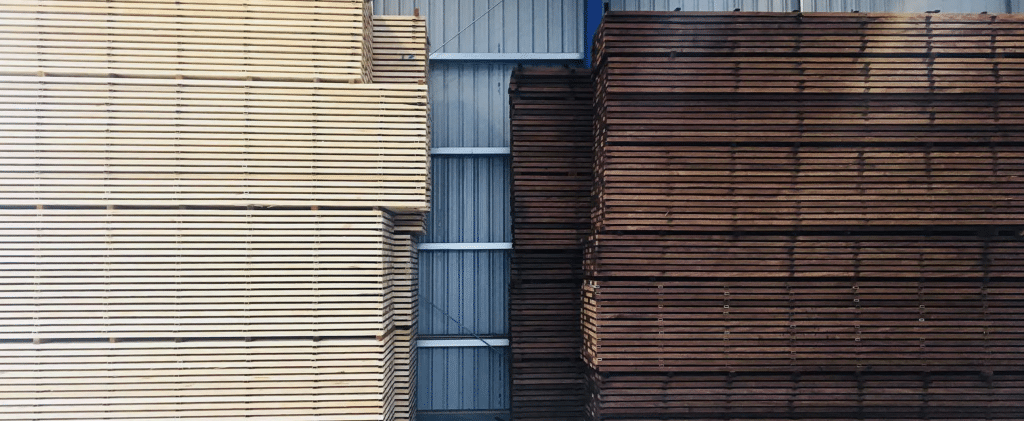
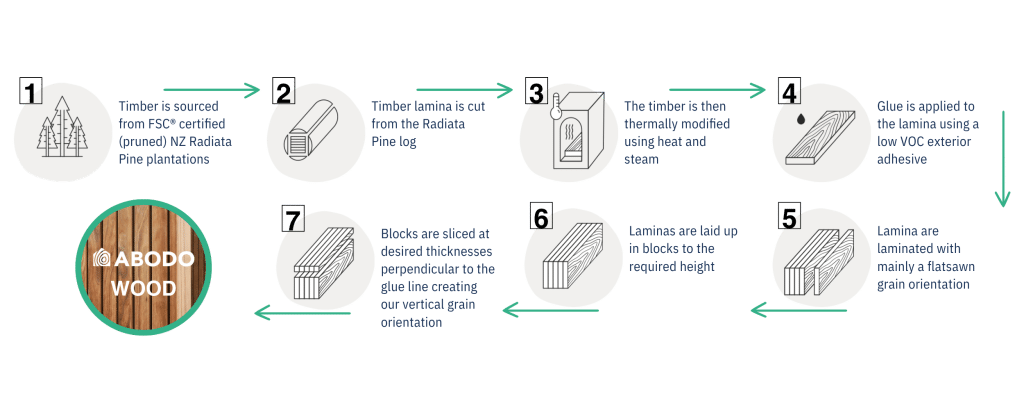
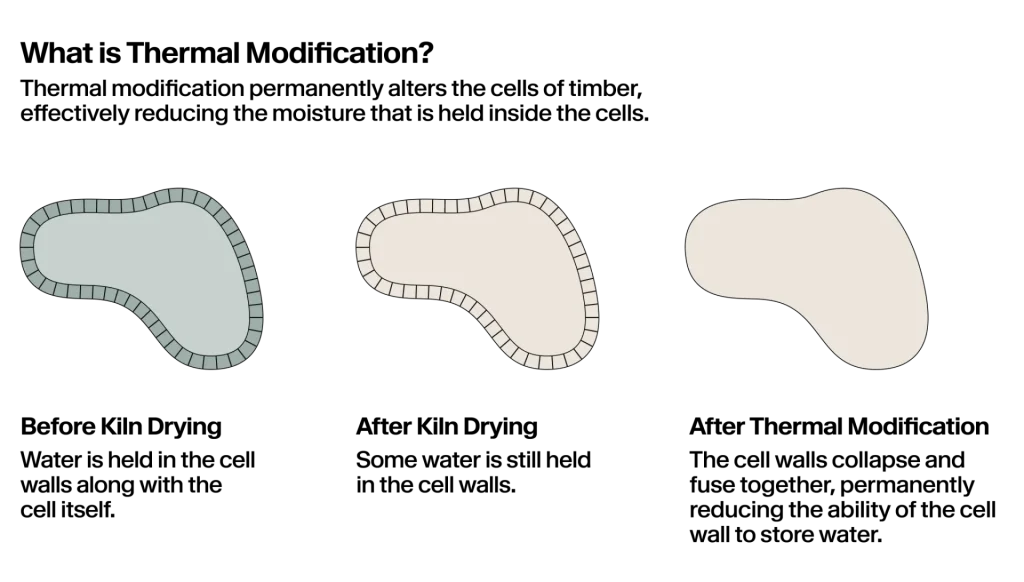
Think of thermal modification like baking bread: when wood is heated in a controlled way, its internal structure changes. In a specialized kiln, the timber is heated to high temperatures in the presence of steam. This process:
- Reduces the wood’s ability to absorb water
- Changes the chemistry inside the wood cells
- Improves stability and durability
- Gives the wood warmer, richer tones
Importantly, this isn’t a surface coating or a chemical treatment, the transformation happens inside the wood itself.
Why This Matters: Better Performance in Real Conditions
Less Moisture Movement = Less Warping & Cracking
Untreated wood naturally absorbs and releases moisture as humidity and weather change. That movement causes boards to swell, shrink, twist, and cup, especially in outdoor settings. Thermally modified wood behaves differently because:
- Its internal moisture content is significantly lower
- Cell walls are altered so they don’t take up as much water
This means less swelling and shrinking over time, translating to boards that stay straighter and finishes that last longer.
Improved Durability Without Chemicals
Because the thermal process drives out sugars and other food sources that fungi and decay organisms thrive on, thermally modified wood becomes more resistant to rot and biological breakdown. This is especially helpful in wet climates where traditional wood species deteriorate faster.
You get durability that rivals naturally long‑lasting species without relying on chemical preservatives, an important advantage for both environmental and aesthetic reasons.¹
Stable Boards Hold Their Shape Better
One standout benefit of thermal modification is dimensional stability, meaning the wood doesn’t change shape as much with moisture swings. This results in:
- Boards that stay flatter
- Fewer visible cracks and splits
- Easier installation and alignment
- Longer‑lasting finishes
In some tests, thermally modified boards showed significantly less movement than untreated wood when exposed to moisture cycling.
Visual Appeal That Ages Well
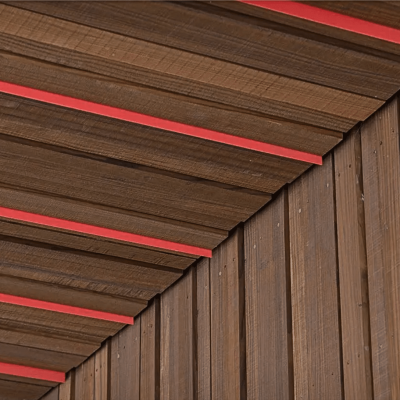
Thermally modified wood naturally darkens through the heating process, giving it rich, warm tones right out of the kiln. Over time, like all exterior wood, it will gently weather to a soft, silvery‑gray if left unfinished, or you can apply oils and stains for color longevity and added protection.
This makes it a popular choice in modern architectural designs where rich, organic character is part of the aesthetic.
Where Thermally Modified Wood Fits in Your Projects
Because of its performance traits, thermally modified wood is especially suited to:
- Decking; where moisture and foot traffic demand stability and durability
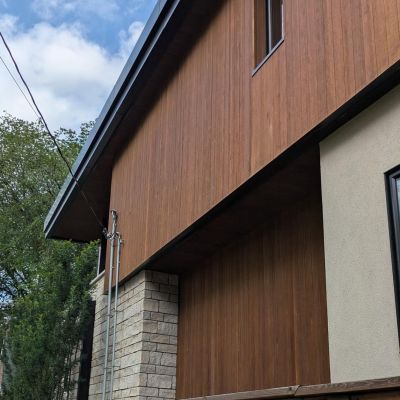
- Exterior cladding & siding; for façades that stay smooth and attractive longer
- Screens & architectural features; where precision and straightness matter
In each case, the reduced movement and improved dimensional stability make installation easier and reduce long‑term maintenance.
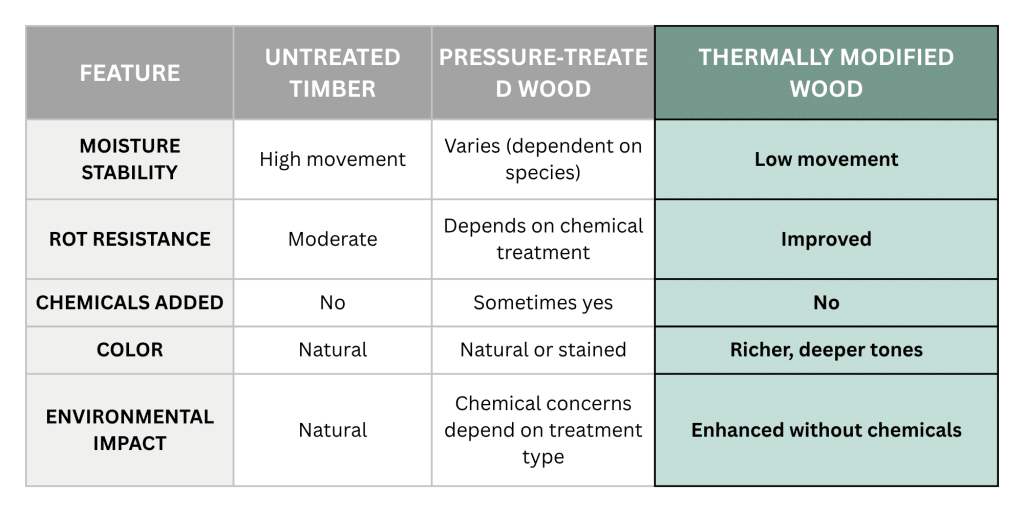
Comparing Thermally Modified Wood to Other Timber Options
In Summary — Why This Matters for Your Builds
Thermally modified wood isn’t just “nice wood with a dark color”, it’s wood that’s been thoughtfully engineered to:
- Be more stable in changing weather
- Resist moisture‑driven movement
- Withstand biological decay
- Look beautiful naturally
At texel, we’re proud to offer thermally modified options like Abodo Thermally Modified Wood because they bring real‑world performance benefits that help your builds age gracefully and perform well in the long term.
Ready to talk about how thermally modified wood can elevate your next project? We’re here to help you choose the right species and profile for your design goals.